Latest BDLHS News
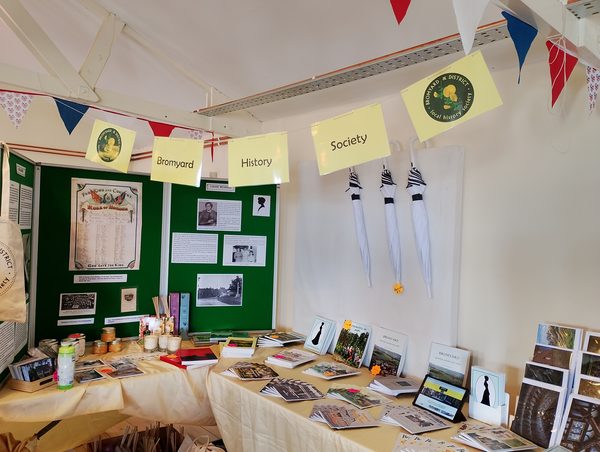
12 September 2026We were very honoured to be invited along to the 70th Anniversary of Upper Sapey (Edith Silcock Memorial) Village Hall on Saturday 5th September.
To commemorate the anniversary a video ‘A Dream Built by Hands’ has been put together by the Upper Sapey community.
Edith Silcock
Edith Silcock taught at Upper Sapey School as headmistress for many years, dedicating her life to the local community.
She was heavily involved with fundraising for a Village Hall at Upper Sapey, raising funds by organising whist drives, concerts, summer fetes and school outings.
Unfortunately she passed away following a long illness in 1949 several years before the Hall was built. The Edith Silcock Memorial Hall was finally built in 1956 at a cost of £1,250.
Miss Margaret Lane, a local to Upper Sapey worked alongside Mrs Silcock at Upper Sapey School as a teacher. The pair also worked together to raise the funds for the new Village Hall assisted by Rev. Cartmel.
The whole community helped with decorating the hall which was built on land given by Sir Francis Winnington of Stanford Court Great Witley.
Her obituary in the Bromyard News on 14th July 1949 reported her numerous activities, her willingness to serve her fellow men and untiring service to the welfare of the children in her charge, made her a most popular and respected member of the community.
She served for many years as secretary of the Parochial Church Council for Upper Sapey Church, clerk to the parish meetings, and secretary of the Entertainment Committee. She was also organiser of the Poppy Day collections for Upper Sapey and local representative of the London Children’s Country Holiday Fund. This was a historic London-based charity established in 1884 to provide countryside breaks for disadvantaged city children.
During her time in Upper Sapey, she also tended and provided flowers for the War Memorial in the Church.
She was cremated at Lodge Hill Crematorium Birmingham. The spray of flowers on the coffin was from the children of Upper Sapey School. […]
Read more…
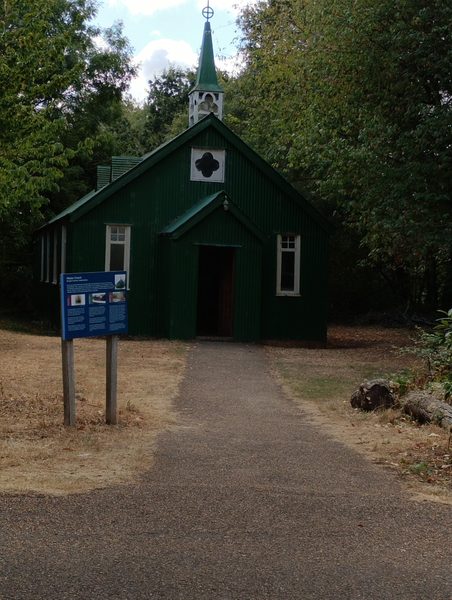
12 September 2026On Wednesday 19th August a group of Bromyard & District Local History Society members visited Avoncroft Museum of Historic Buildings. One of the buildings there, the Bringsty Mission Church
(or Tin Church) from Bringsty Common was dismantled and moved to the site in 1995.
This church was built in the parish of Whitbourne in 1891, at a cost of £70.00. The building arrived in the form of a flat pack at nearby Brockhampton railway sidings and was then transported by horse and cart for the two and a half miles to it’s permanent site at the side of the side of the Bromyard to Worcester road. […]
Read more…
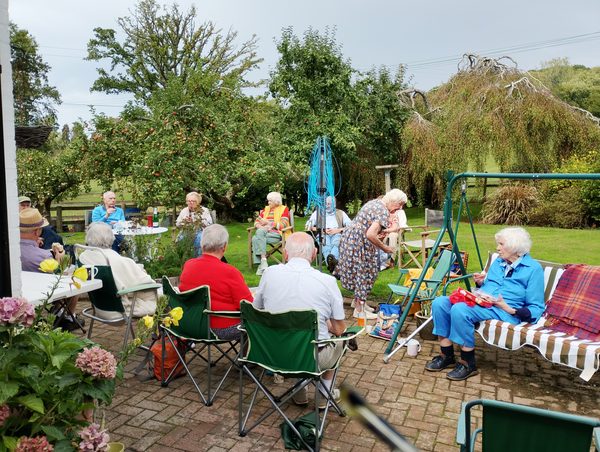
12 September 2026On Sunday 6th September members of the Society gathered together on a lovely sunny afternoon to celebrate our 60th anniversary at the home of member Sue Cooper. A lovely time was had by all, reminiscing about their time as members. […]
Read more…
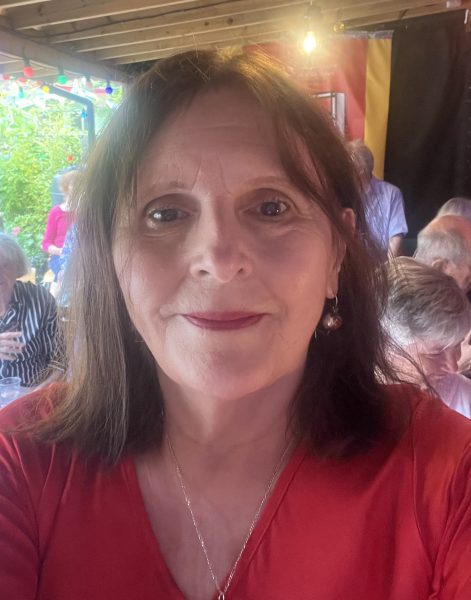
4 September 2026by novelist Caroline Willcocks
Four talks on the Tudor Queens from 2pm to 4 pm, at Bromyard and District Local History Centre on October 3rd, 10th, 17th and 24th.Booking essential as we have limited places. Each talk is standalone but can also be booked as a course of four for the price of three via the Conquest Theatre booking system. Bookings can also be made in person at the theatre on Saturday and Wednesday mornings between 10.30am and 12.30pm.
What was life really like for Henry VIII’s six wives? Caroline Willcocks, who has researched and written four successful novels on the Tudor Queens, talks about their lives and loves. Was Katherine of Aragon a liar? Was Anne Boleyn a schemer? Did Anne of Cleves smell? Over four talks she discusses these women and the legacy they have left. Caroline has lived in Bromyard for the last six years, with her husband the poet John Pare, a dog and a cat. She has worked in the theatre, freelance journalism and for charities before writing six novels (so far). Her work examines human emotions in a historical context and celebrates the passion and danger of the Tudor court.
Katherine of Aragon: Beyond the StereotypesUnveiling the True Character of Henry the Eighth’s First Tudor Queen
Explore the extraordinary life of Katherine of Aragon, the first wife of Henry VIII. Too often dismissed as dowdy and overly pious, Katherine’s true legacy is far richer and more nuanced. Was she merely a devout and plain figure, or did her intelligence, political acumen, and beauty shape the course of English history? Discover how Katherine navigated the treacherous world of Tudor politics, championed scholarship for women, and inspired devotion and respect across Europe. This session will challenge prevailing myths and invite you to see Katherine not as a passive victim, but as a clever, resilient, and charismatic queen whose influence is celebrated to this day.
Accompanying novel ‘Of Aragon’ by Caroline Willcocks.
The Enigma of Anne BoleynUnprincipled Schemer or Protestant and Feminist Martyr?
Join us for a thought-provoking talk exploring the life and legacy of Anne Boleyn. one of the most fascinating figures in British history, she has achieved the status of an icon. Was she simply an ambitious manipulator, ruthlessly pursuing power at court, or does her story reveal a courageous woman who championed Protestant reform and aid for early foundations? This session will delve into the intrigue of Henry VIII’s court, Anne’s pivotal role in England’s religious transformation, and the myths and truths that have shaped her reputation over the centuries. Discover how Anne Boleyn’s brief but impactful life continues to inspire debate: was she an unprincipled schemer, or a martyr for her faith and for women’s agency?
The session will also look at Jane Seymour, the only queen to give Henry VIII a son.
Accompanying novel ‘The Duty of Women’ by Caroline Willcocks.
A Tale of Two Queens: Anne of Cleves & Katherine HowardHistory, Inexperience, and the Ghosts of Henry VIII’s Wives
Enjoy this engaging talk exploring the lives and legacies of Anne of Cleves and Katherine Howard, two of Henry VIII’s most enigmatic wives. We’ll delve into how their relative inexperience shaped their time at court, examining the unique challenges they faced in navigating the treacherous waters of Tudor politics and royal expectations.
In the second half, prepare for a lighter—and spookier—journey as we uncover the ghostly legends surrounding Henry’s wives. From phantom footsteps in haunted halls to spectral encounters that have captured imaginations for centuries, discover how these women’s stories continue to linger long after their reigns ended. It’s history with a supernatural twist!
Accompanying novel ‘Girl Queens’.
Katherine Parr: Scholar, Survivor, and QueenA Talk Exploring the Perilous Path of England’s Last Tudor Queen
Discover the remarkable life of Katherine Parr in this absorbing talk, where we delve into the dangerous journey she undertook as Henry VIII’s sixth and final wife. Katherine’s intellect and scholarship not only shaped the religious and cultural landscape of her era, but also offered her unique influence over Henry’s children — Edward, Mary and Elizabeth — helping to nurture and set the course of England’s next three monarchs. Yet, beneath her composed exterior lay the heart of a woman who risked everything for love, culminating in a passionate affair that ultimately led to her tragic demise. Join us for an illuminating exploration of Katherine Parr’s courage, her legacy of learning, and the lasting impact of her relationships within the Tudor court.
Accompanying novel ‘The Shadow of the King’. […]
Read more…
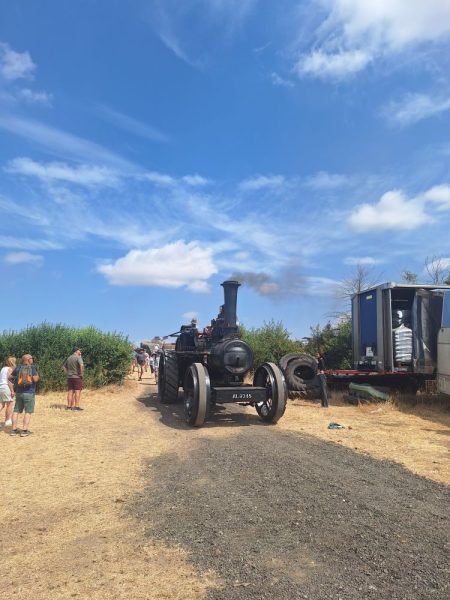
28 July 2026Welland held it’s annual steam rally over the last weekend in July.
For more information see their website […]
Read more…
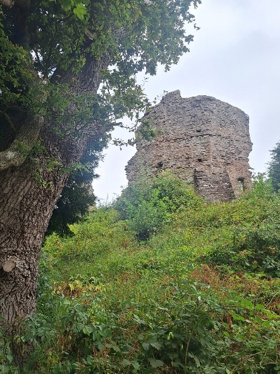
25 July 2026On 15th July 2026 a group of members visited Snodhill Castle – the trip having been postponed from the previous week when the weather heatwave meant the site was like a ‘furnace’ we were lucky to have much kinder weather and a very interesting and enjoyable visit.
Snodhill Castle was originally built to defend the Welsh border by William Fitz Osbern in1068 – initially in wood with later phases in stone. For 300 years between C13 – C15 the castle was owned by the Chandos family who were responsible for some of the more decorative features of the twelve sided keep. It seems that the Chandos family mostly used the castle and surrounding deer park as a show of power and prestige rather than a residence.
Unusually the castle chapel is a Royal Free Chapel with chaplains appointed by the King rather than the Bishop of Hereford. Also unusual is the double postern gate.
After the Civil War the castle was systematically dismantled by the Prosser family and most of the stone sold. This has made it particularly difficult to identify phases of building. Tim Hoverd, Herefordshire Archaelologist explained that they had excavated 37 trenches and the next phase would be to use ground penetrating radar.
Our excellent tour guide was Dr Sarah Lewis, latterly Inspector of Ancient Buildings for English Heritage (and a modest but talented artist with prints of Snodhill Castle for sale) and we also met Garry Crook, chair of the Snodhill Castle Preservation Trust who instigated the clearing and subsequent excavation of the site which had been long neglected.
Debbie Hughes […]
Read more…
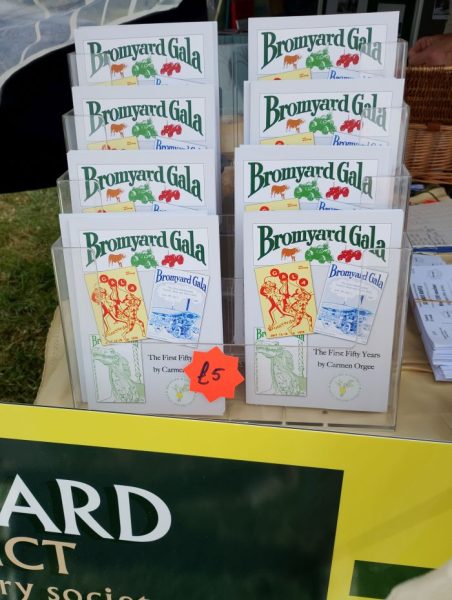
14 July 2026This year Bromyard & District Local History Society, along with Binyon’s of Bromyard had the honour of sponsoring the Bromyard Gala programme which enabled us both to attend with a joint stand of books etc.
The Society has been attending the Gala for many years but it was the first time for our partner’s Binyon’s of Bromyard.
The weather was beautiful and we had a very successful day. Thank you very much to the Gala Committee for accommodating us once again. […]
Read more…
27 June 2026On July 4th at Herefordshire’s History Store between 10am and 4pm the following event will take place.
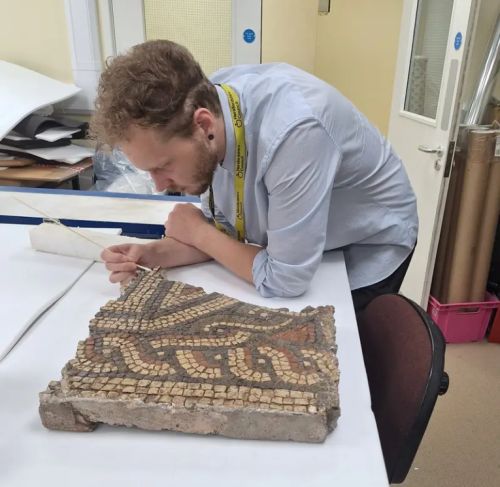
Cleaning a Roman mosaic is far more than simply removing dirt—it’s an act of rediscovery. Each tile holds a story, and as the centuries of grime are gently lifted away, vibrant colours and intricate patterns begin to reappear, revealing the craftsmanship of ancient artisans.
The process demands patience, precision, and respect, blending science with artistry to ensure every fragile tessera is preserved. Using delicate tools and meticulous techniques, each stroke of the swab feels like a conversation with the past, uncovering details long hidden from view. Watching the mosaic emerge, its beauty slowly restored, is like witnessing history awaken beneath your fingertips.
What once lay buried now gleams with renewed life, offering a glimpse into the creativity and culture of those who came before us. Every sparkling piece connects us to that enduring legacy, inviting all who see it to share in its timeless story.
Admission / Ticket Info:
10am – 4pm
Email herefordmuseums@herefordshire.gov.uk to book
Under 18s must be accompanied by an adult
Lunch is not included
Disabled Access:
History Store: Offers step-free access and accessible facilities. A detailed access guide is available on our website via the History Store page. For further details or assistance download access guides www.herefordshire.gov.uk/history-lives
Disabled Facilities:
History Store: Offers step-free access and accessible facilities. A detailed access guide is available on our website via the History Store page. For further details or assistance download access guides www.herefordshire.gov.uk/history-lives
Contact:
herefordmuseums@herefordshire.gov.uk
01432383383
The History StoreFriars StreetHerefordHerefordshireHR4 0AS […]
Read more…
12 June 2026Old Bromyard – Journal 2012 no 35Judith has been busy looking through old copies of the Bromyard News and Record for 1959.
She found a series of ‘Recollections of Old Bromyard’ , contributed by a reader who found them, written by W. Madders, describing aspects of Bromyard ‘about seventy years ago’. That would have been in the late 1800s. Some of them are reproduced in this Journal, on pages 7, 11, 26 and 38.
More recollections of Bromyard—Spital TreesTaken from articles written by the late W.Madders.When I was a boy there used to be at Flaggoners Green a spital tree works. I have looked in Chambers dictionary for a definition of what a spital tree is but have failed to find it. It is a local word for a spade or fork handle. Because they used to be made there.A Mr. Evans was the proprietor, and after his death his nephew, Mr.T.Hinksman, carried it on for a good many years. He was my Sunday School teacher when I attended Wesleyans (the school was then held in a large room belonging to Mr.Jenks, Tanner, in Pump Street).Several men were employed at Flaggoners Green, sawyers, turners and others, the trunks (ash I believe) were brought by teams of horses from the neighbourhood, and were cut up by manual labour. A pit was made, and one sawyer stood upon the trunk and one below on the pit, one pulled the saw down and the other pushed it up. The top sawyer was the better man and undoubtedly gave rise to the sporting term “He be a top sawyer”. I used to watch the men at work and noticed that the rough handles were placed in very hot water, and then bent to the proper shape, sometimes they broke or split, when they were thrown out to augment the slabs which were sold for firewood, and were eagerly sought for that purpose. It was a great pity that both this factory as well as the Tannery should have to be closed, as they furnished work for about thirty men between them.
Rouse Bros. (George and Edward “Ted”) with their father also used to employ a good many men.There used to be a Brickyard in the New Road (where the School Cookery Canteen now is) and I well remember seeing the children running with the wet clay in wooden moulds from the brickmakers and placing them in long rows to dry in the sun, preparatory to their being burnt in the kilns.The late Mr. D. McIntosh, the draper and outfitter, also started a clothing factory in the New Road and employed about twenty hands (this factory has just been taken down and is now the petrol pumps at the bottom of the road).Passing now to another subject, that brought to remembrance Stage and Mail Coach days. Not that I remember these. But there used to live in the High Street, next door but two to the N. P. Bank, an old gentleman, Mr. T. Godwin, “Tammy” Godwin for short.I understood that he had been a stage coach driver between Bromyard, Worcester and Hereford. He was a big old gentleman, and used to wear a long gold chain round his neck, which descended across his portly body. He used to come and talk with the lateMr. T. W.Williams when I was apprenticed there.I once rode to Worcester in an old coach (a two horse) from the Hop Pole. I wonder what became of it. It would be most interesting to see.(re-typed by Judith Evans from the Bromyard News & Record, 24th September 1959.)
Old Bromyard- Mop FairsSome recollections of Bromyard
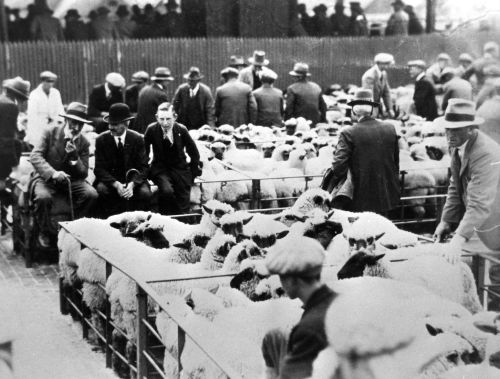
Mr Roper of Linceter at the market with sheep c1930
There was no Bromyard Smithfield in my schooldays, but a public market the sheep and pigs being penned in Sheep Street, and I have seen the pens filled from Milvern Lane corner up to Billy Mitchell’s house, which was just past Taylor’s orchard. The cattle stood right from Milvern Lane and down High Street as far as the New Road corner and then up the hill as far as the house just below Hillcrest.It was said that a farmer named Philpott of the Brook House, Avenbury, had as many as a thousand sheep at Bromyard fair at one time. The pens, as they were called, were kept at Sally Green’s, the name by which she was known, and were erected in the early morning. They were supported by posts driven into the ground and the pens were tied by string to these and to other pens. I know the boys used to plague the sheep, and try to make them jump over the hurdles,which when they did, there were shouts of delight, and chasing, to bring them back. These fairs were held about three or four times a year, there being no fortnightly sales.
Hiring fairs or “Mops” as they were called, were held two or three times a year, when farm hands would come to meet would-be employers to whom they offered their services. (You will please remember I was only a boy of between six and twelve years but I used to ask questions of my father and mother and having a fairly retentive memory I almost imperceptibly observed and retained the informationwhich is now to me so interesting).I remember seeing one man with a whip in hand which showed he offered himself as a waggoner. At these Mops there used to assemble men with punching machines, and the way in which these amateur “Tom Springs” went for the image was almost alarming to me. Men singing songs and selling the sheets containing the words of the songs, such as “They are going to tax the fleas?” and other sentiments of a rather doubtful character.
Market Day – outside the Falcon Hotel, undated
The Mops were held in the Market Square and Broad Street, not in High Street, and any further than Mr.Grubb’s ironmongers shop (which was then opposite Ross’s Boot shop). There were stalls for the sale of nuts, oranges and gingerbreads; also shooting galleries in the Square, where you shot through a long tube at a bell at the further end, if you made a bull’s eye it rang a bell. There were also stalls where you had a gun, one shot a penny at a revolving wheel whereupon was printed on the rim figures one to twelve; whatever number you hit you had the number of nuts; I had twelve once.A constant attendant at these Mops was an old besom seller named Both who lived on the Downs. He wore a smock frock and used to bring a sort of gaming table on which was a blank and on three other places home made Banbury cakes. I believe one, two and three. You put your money and spun a pointer on a swivel, and on whatever pile it stopped you had that prize. Sometimes you had a blank.
Just when the bicycle was placed on the market there came into the Square a fresh attraction to the ordinary roundabout. This was a collection of machines with pedals attached to each other, and when mounted and the riders pedalled they all went round together on a metal track. I remember seeing a lot of young men going round once and the attendants had to expend considerable time and trouble in acting as brakes to overcome the young men’s energy, to bringthe machines to a standstill. The sympathy of the spectators was, of course, with the ardent racers.
Writing of bicycles reminds me that I saw at Broadwas, when I was very young, a two wooden wheels bicycle which my Uncle George had made. It was about the height of the ordinary safety one now in use. But it had no pedals. It was propelled by the rider sitting astride andusing his legs alternately along the ground. Of course, it was of no use whatever up hill, but he could get along by this method at the rate of eight miles an hour – so he said. I know I was very interested in it. How I practised on an old boneshaker weighing ninety pounds I will tell another time.(re-typed by Judith Evans from the Bromyard News & Record of 3rd September Record of 3rd September 1959.)
NB: Images from our archive were added for this post for interest. […]
Read more…
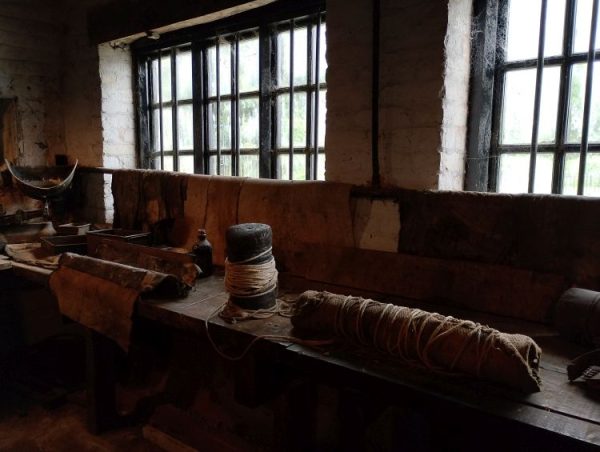
12 June 2026On Wednesday 10th June the Society visited Forge Mill Needle Museum in Redditch. The museum illustrates the rich heritage of the needle and fishing tackle industries. Needle making has been recorded in the area as early as the 1639. The building was originally an iron forge, but was converted into a scouring mill for needle production in 1730. The mill became steam powered in 1870. The mill closed in 1958. At its peak in the 1870s, the area was producing around 3.5 billion needles per year, around 90% of the world’s needle production. Forge Mill reopened as a museum, with Queen Elizabeth 11 visiting for the opening ceremony on 5 July 1983.
A short walk from the Museum, were the ruins of Bordesley Abbey – a medieval Cistercian Abbey which has been extensively excavated.
The Visitor Centre is set in an original reconstructed 16th century barn and tells the extraordinary story of the Abbey from it’s development in the 12th century to it’s destruction in 1538 by Henry the Vlll during the dissolution.
A lovely day was had by all, even the odd shower didn’t ruin our enjoyment of this fascinating place. […]
Read more…
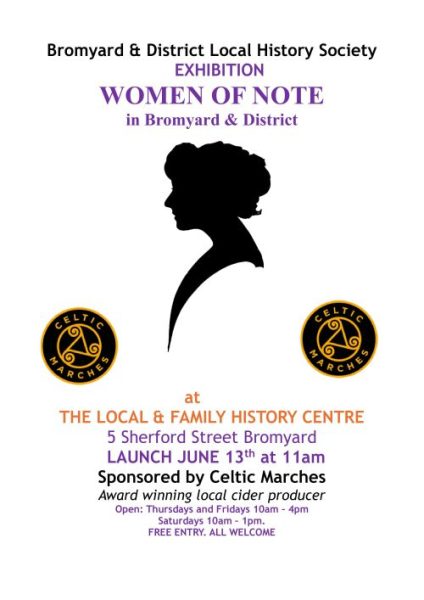
29 May 2026Our next exhibition is “Women of Note in Bromyard and District ” and will be opened by Mrs Marianne Boddington.
The launch is taking place on Saturday 13th June at the Local & Family History Centre, Sherford Street with a Coffee Morning at 11am
When you think of the phrase ‘Women of Note’ your mind might automatically conjure up images of a certain celebrity, a noted author or a historical figure. However, the idea of a ‘woman of note’ is much wider than that. Culturally the phrase is used to describe women who may have made their mark on the world in some way, but that doesn’t have to be through creating change or achieving celebrity. Arguably a ‘Woman of Note’ is any woman who is memorable or inspiring in some way and Bromyard has had more than its fair share of those ladies! […]
Read more…
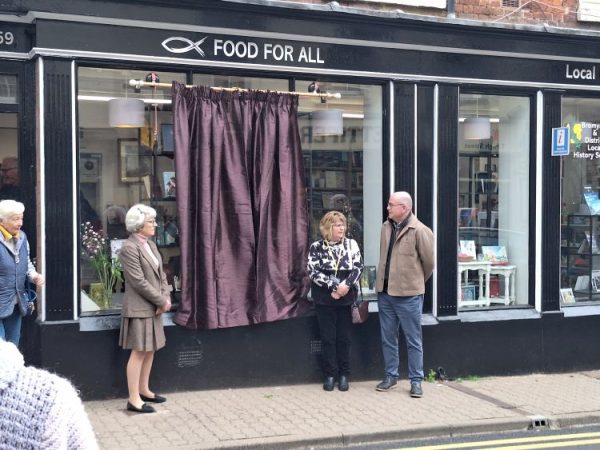
17 May 2026On the morning of Saturday 16th May members and representatives of Food for All, Bromyard and District Local History Society and Bromyard Tourist Information Centre gathered with the Mayor and Mayoress of Bromyard at 10-12 High Street in anticipation of the opening of ‘Binyon’s of Bromyard’.
Tea. coffee, fizz, homemade cake and biscuits were enjoyed while chatting before the opening ceremony. Prayers led by Fr Paul Stonham, were followed by words from Robert Hollis of Food for All and Mandy Palmer of BDLHS welcoming the new partnership and looking forward to working successfully together.
Outside, to applause (and the bemusement of passing drivers), Susanna Lady McFarlane unveiled the new Binyon’s of Bromyard shop window – the start of an exciting new chapter for all three organisations. […]
Read more…
7 May 2026We are delighted to invite you to the opening of “Binyon’s of Bromyard”.
Come celebrate our new space, meet the team, and enjoy a reception at 11am followed by the opening at 12 noon by our Patron Susanna Lady McFarlane on Saturday 16th May at 12 Broad Street Bromyard. […]
Read more…
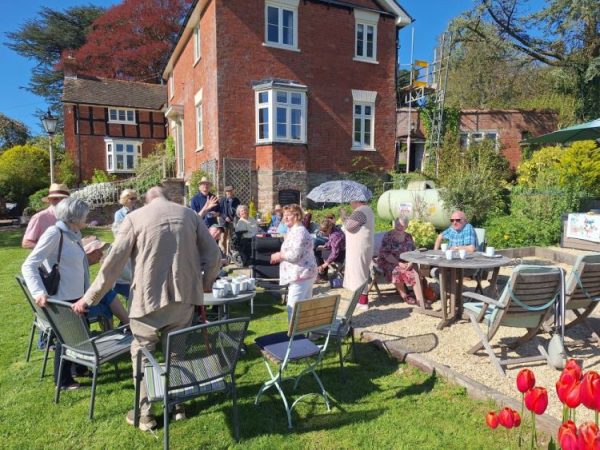
2 May 2026We were very lucky with the weather so everyone enjoyed tea and cake in the garden where the tulips were still looking good. Also a spot of plant inspection and discussion and chance to look at documentation about Lower House and Thornbury displayed in the dining room. […]
Read more…

9 March 2026We are delighted to announce that our shop, History on Broad St, is on the verge of a new adventure. We are entering into a collaboration with the shop currently known as Food For All at No. 12 High Street, under the integrated new name of Binyons of Bromyard. HOBS will close on 25th April, 2026 and the opening of the new enterprise will be on Saturday, 2nd May, 2026.
Soon to be renamed ‘Binyons of Bromyard’ […]
Read more…
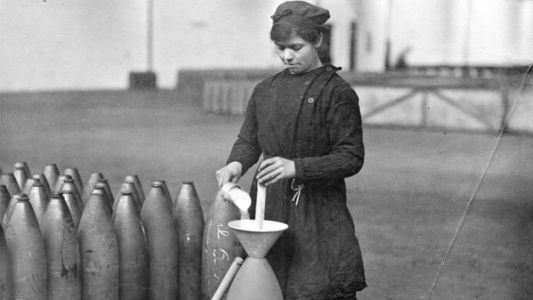
8 February 2026On Saturday 14th February the Rotherwas Together Exhibition was opened at the Local & Family History Centre by Society Chairman Mandy Palmer. Many visitors arrived for the opening which included the family of Kay (Kathleen) Bloomfield nee Eldridge who worked at Hereford Munitions Factory and Sally and Roger Dickson whose Mother and Aunt also worked there.
The exhibition is on until Saturday 23rd May. Opening times areThursdays & Fridays 10am – 4pmSaturdays 10am – 1pm.
Rotherwas Together is the Herefordshire-based voluntary organisation dedicated to researching stories and raising awareness of the munitions factory ROF Rotherwas, the Royal Ordnance Factory built during the First World War. The factory was used for filling shells, with the first ones rolling off the production line in November 1916. The munitions site closed after the Second World War and became home to many businesses from the 1960s onwards and is now the Hereford Enterprise Zone.
Various smaller exhibitions have been held across Herefordshire and beyond, but an exciting partnership for 2026 sees a new venture where all the Rotherwas exhibitions are brought together in one venue. Working with Bromyard & District Local History Society, the exhibition will be hosted at Bromyard Local History Centre between 14th February and 23rd May 2026.
The exhibition includes stories of some of the brave women who worked at the munitions factory during both wars, and how the factory came about in the first place. It explains about the uniforms and protective clothing which was used during the First World War, and how the name ‘canary girls’ given to the women came about. There is also the remarkable story of the Rotherwas women’s football team, who played in front of big crowds during the First World War.
Alongside the stories are original artefacts and a recreation of a First World War factory uniform. Information will be available about how to trace your own ancestors who may have worked at Rotherwas, and there will be several talks about the history of the munitions in Herefordshire. […]
Read more…
19 October 202526/09/2025
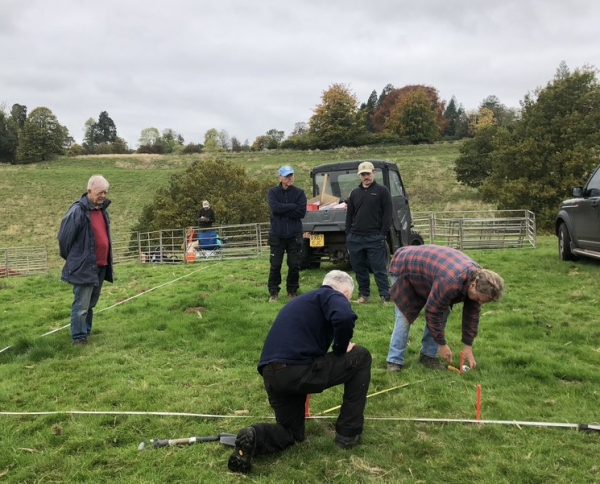
In the past three weeks two test pits have been dug to the south and inline with the main trench. TP1 revealed a flint arrow head (poss ) and medieval pottery.TP2 revealed two shards of medieval pottery.
The whole area has in the post medieval period been built up to form a platform to a height of 60cm above the medieval top soil.A theodolite was used to ascertain the original medieval ground surface between TP2 and Trench 3. The result was 2.36mtrs .
TP1 revealed a large concentration of charcoal which appeared to be sitting on the natural land surface of the medieval level. A sample of this was collected with the hope of having it carbon dated at some point in the future.TP2. was backfilled.
10/10/25
TP3 (test pit) was dug out 15 mtrs east and 3 mtrs north of trench 2.Spit 2 revealed glass and pottery shards 17/18 C. Charcoal, Clay pipe stem and burnt clay.Spit 3. 17/18 C pottery, charcoal, curved green glass fragment ( bottle )17C. Daub. Clay pipe bowl. Burnt clay. fragment of Staffordshire slipware 17/18 C. A shard of Medieval pottery. Spit 4. Two pieces of metal with slag. Three pieces of iron ( poss nails ) unstratified ( found in soil heap )
Test pit 4.Spit 1 ( 6cm depth ). Shard pottery and fine fragment of green glass bottle. 17/18 C. Charcoal. Clay pipe fragments. Building Lime.Spit 2. 13/14 C pottery shard. Pipe fragment. Flint fragment.
Back […]
Read more…
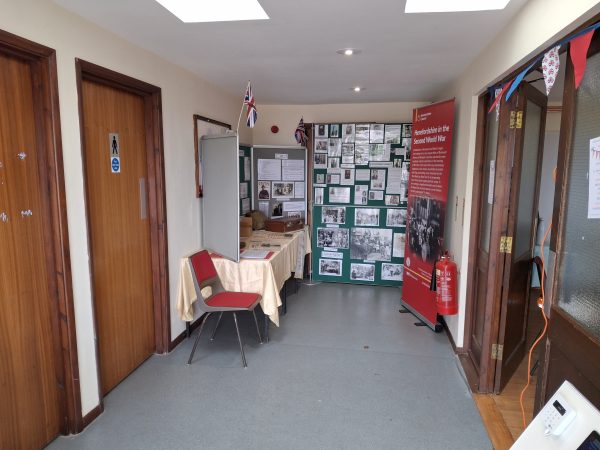
14 September 2025On the 6th of September members of the society ran a pop-up exhibition at Upper Sapey’s WWII event. In particular the organisers thanked Hugh Langishe ‘for his wonderful talk and insight into his experiences of the war – it was a real privilege to be able to hear stories from someone who was actually there‘.
Back […]
Read more…
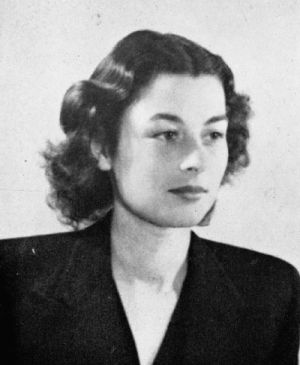
22 July 2025Violette Szabo was a secret agent working for the Special Operations Executive during World War II. Violette took on special missions behind enemy lines following the death of her French officer husband at the Battle of El Alamein and because of her bravery was awarded the George Cross (the first woman to receive the award) and the Croix du Guerre. Violette was captured, tortured and executed in 1945 by the Germans, while to honour her memory and that of her husband Etienne Szabo their daughter Tania supports The Violette Szabo Museum that enables people to learn about her parents’ bravery during the war. The museum opened its doors in June 2000 and was the brain child of Rosemary Rigby MBE who was Violette’s aunt.
The Museum is located in the grounds of a small house named Cartref where Violette spent many happy childhood days and did indeed stay between her missions to France during the war.
This will be a car sharing trip, leaving the Conquest Car Park at 1.00pm. The tour starts at 3.00pm led by her Aunt, Rosemary Rigby. There is no charge, but donations towards the running of the museum will be gratefully accepted (cash only).
If you are interested in this visit can you please email: programme@bromyardhistorysociety.org.uk
Should you have spare seats or wish to have a lift can you please include this information in your email.
Back […]
Read more…
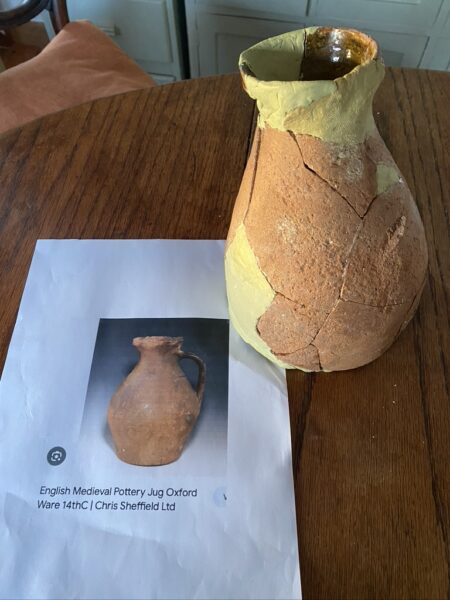
22 July 2025During excavations in 2017 at Rowden Abbey pot shards from the 15th/ 16th century were found on the island at Rowden Abbey. The shards were put together recently using a two part epoxy resin Milliput putty by Hilary Higgot, one of the archaeology team members. A container full of sand was used to support the shards as they were put together.
The vessel is in the possession of Earnest Wainright and on display at Rowden Abbey.
Visit our archaeology group page for more information about the various digs.
Back […]
Read more…
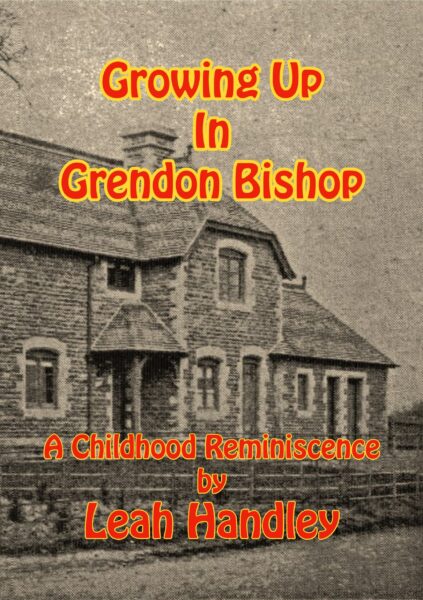
21 July 2025The society has published a new book ‘Growing up in Grendon Bishop’ – a childhood reminscence by Leah Handley.
Leah Handley was born in Grendon Bishop in 1920, the third of five children. She loved her rural childhood in the interwar years and her time as a pupil at Bredenbury School, and although she moved to Birmingham when she grew up, as an “old lady of 72” (her words), she jotted down a few reminiscences of her childhood for some young friends living close by. This is a charming account of country life in the 1920s, and a splendid addition to any local history library.
You can buy a copy from our online shop, from the LHS centre or from History on Broad St.
Back […]
Read more…
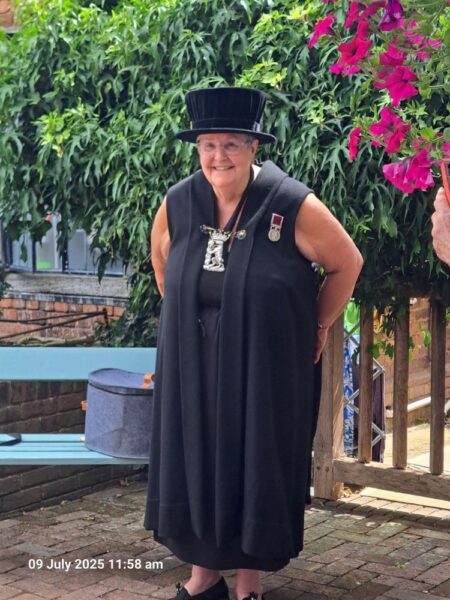
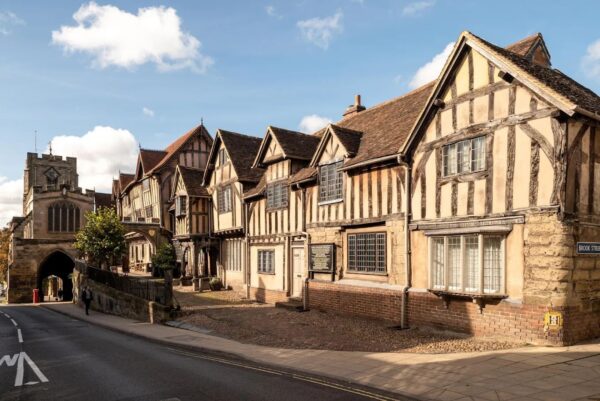
16 July 2025Our July visit was to the Lord Leycester Hospital in Warwick. Most people would know that Warwick has a castle, but few would be aware of the existence of the Lord Leycester Hospital. This magnificent building, which is over 900 years’ old and one of the few survivors from fire in the 17th Century. We were greeted by Jan Brodie Murphy, a Bromyard girl, who is now a brother in the community.
Over 700 years ago, the United Guilds of Warwick built their headquarters consisting of a conference room, banqueting hall, mansion for the Master of the Guilds, storage rooms and lodgings for travellers. The Guildsmen built this splendid example of medieval half-timbered buildings with trees felled in the 1200’s from forests across England. Today, the site survives intact and tops the list of most complete and important medieval buildings in the British Isles.
Today, the Master and Brethren still live in the community of the Lord Leycester established by Robert Dudley. Within the honey-coloured half-timbered walls it is as if time stood still. The Master and Brethren still wear Tudor livery and adhere to an ancient way of life. The Royal Hospital Chelsea, with its in-pensioners in their scarlet coloured livery are famous worldwide – The Lord Leycester is a much older, quieter and smaller forerunner of this most English of institutions. However, both have stood the test of time and still provide a place of sanctuary for those who have sacrificed to serve their country.
Back […]
Read more…
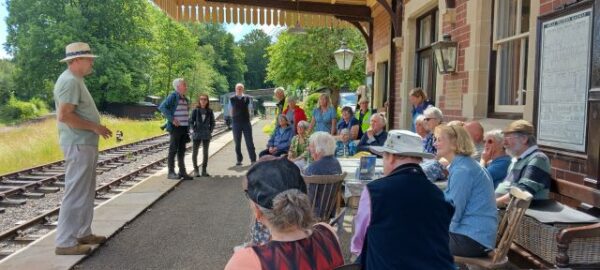
9 July 2025On the 26th June 2025 as part of their tour of summer visits, members of the Bromyard & District Local History Society were given a guided tour of Rowden Mill Station by Paul and Cecilia.This coincides with the ‘railway 200’ celebrations since 2025 is the 200th anniversary of modern train travel.
Brief History notes for Rowden Mill StationOpened 1st September 1897Opened as part of the final section of the Worcester, Bromyard and Leominster Railway, the railway was bought out of bankruptcy by the Great Western Railway in 1888, which completed the line in 1897Closed 15th September, 1952After the Second World War, and with the greater use of the motorbus and private cars, traffic on the line fell considerably. Unstaffed as a station from September 1949, the line closed to regular passenger services on 15 September 1952.On 26 April 1958, a special train organised by the Stephenson Locomotive Society ran from Worcester Shrub Hill to Leominster, via Bromyard, calling at Rowden Mill, Fencote and Steens Bridge. The 50 society members rode on the last train that would run on the complete track before it was removed. The Worcester to Bromyard section was subsequently closed under the Beeching Axe in 1964.Purchased in dilapidated state on 28th September 1984 by John, Sue & James WilkinsonRestored in 1985 (The 150th Anniversary year of the Great Western Railway)The Rowden Mill site was purchased privately in 1984 and was restored. Two sections of track were also reinstalled. Rolling stock of various types including coaches, brake vans and goods vans have been located on the line at various times in the recent past.In March 1989 received the ‘Ian Allan Railway Heritage Award for the ‘Best Renovated Non-Working Station’. It was presented at Stationers Hall in London (21-03-89) by Lord Montague.
Purchased by Paul Kirwan and Cecilia Chavez-Brandon on the 9th of June, 2017.
Cecilia and Paul have continued the work started by the Wilkinsons. Along with the restoration of the cattle dock on the green platform, currently in preservation at Rowden Mill Station are: a 1962 Inspection Saloon Coach (DB999508), 1947 Brakevan (GWR35251), a 1961 BR VanWide (B782879), 1937 GWR ventilated Goods Van (‘Mink) and a 1950s BR Shocvan (B853318)In December 2023, Rowden Mill Station received a National Railway Heritage Award for ‘ Restoration on a Closed Line’ (category sponsored by National Highways). It was presented at Merchant Taylors Hall in London by Bill Reeve, Director of Transport Scotland.With the blue plaque commemorating this award unveiled at Rowden Mill station on 2nd September 2024. With over 200 visitors, it was also an Open Day; successfully raising funds in aid of the renovations of Bredenbury Village Hall.On the 26th February 2025, at the inaugural Visit Herefordshire Tourism Awards 2024, Rowden Mill Station was awarded a ‘Judge’s Commendation’ for ‘Restoration of the Year’References:https://htt.herefordshire.gov.uk/her-search/monuments-search/search/Monument?ID=30874
Rowden Mill stationSMR Number : 30874Grid Reference : SO 6270 5653Parish : WACTON, HEREFORDSHIREOS; map 1964 (2). OS map 1st Edition 13 SE shows no railway. (1) Photo. Station restored over a period up to 1984. Received BR’s Heritage Award in 1989 (3, p128). Owner provides holiday accommodation in former LMS Inspection saloon (4, p179). Line continues maps OS map 1964 65 SW, 65 NE (2), OS map 1st Edition 21 NW, 21 SW shows no railway. (1)Monument Type(s) RAILWAY STATION (Post Medieval – 1540 AD to 1900 AD)
Back […]
Read more…
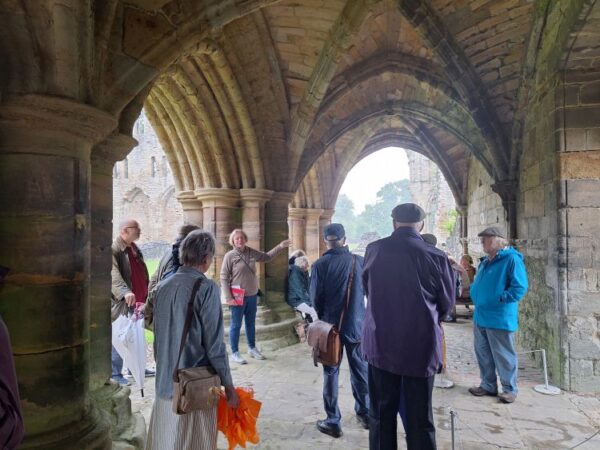
17 June 2025On 12th June 2025 we enjoyed a group visit to Wenlock Priory which followed on from Will Motley’s talk on 9th April. We arrived in the morning with time for coffee, exploring the town and lunch before our visit to the Priory itself. The Museum was interesting and informative and the church and Guildhall also worth visiting.
Whilst the morning was dry, as we headed to the Priory reception, the rain started and lasted for most of our visit. Fortunately, there were trees and a remaining roofed part of the Cloister to shelter under whilst our guide, Susan, gave us an informative and interactive talk about the history of the Priory and remaining stonework. Happily, we were joined by Will Motley who was able to add lots of interesting detail.
The rain eased off a little allowing us to explore the ruins of which the elaborately carved Norman Chapter House was particularly stunning. There was also the lavabo, cloister garden with anthropomorphic topiary, and a collection of Mediaeval to Victorian tiles to admire.
Of course, as our visit ended and we set off home the rain eased and blue sky began to appear!
Debbie Hughes
Back […]
Read more…
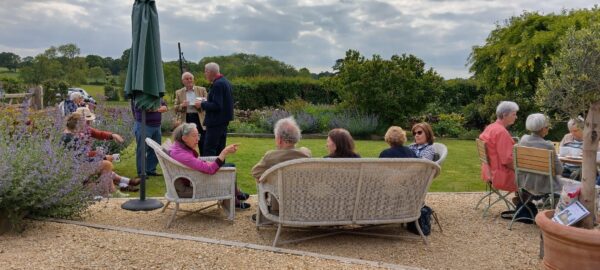
23 May 2025Firstly, a huge thank you to Debbie and Peter for hosting the afternoon at Thornbury on Monday 19th May. The weather was glorious – warm and sunny but not overly hot. We had a wonderful turn out at the church for Debbie’s talk after which a general discussion and Q&A ensued with much members’ knowledge being shared. Tea and yummy cakes were served in the garden afterwards and hopefully a good time was had by all.
We sold £24 worth of the new Thornbury Church publication and we raised a further £132 from donations which has been split equally between the History Society and St Anna’s Church.
We look forward to seeing another good turn out for Rowden Mill Station on 26th June. David Grant and I did a site visit earlier in the week and a flyer and an update on the format and parking arrangements will be circulated in a few days’ time. In the meantime, enjoy these photos from Thornbury.Joy Hoyle
Back […]
Read more…
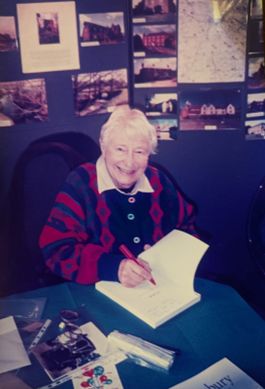
5 April 2025On 30th March 2025 Phyllis died peacefully at home in Skenfrith with her family, aged 100 years.Historian, author and farmer; Phyllis was born in Birmingham to Frank and Dolly Cope. Frank, was a successful motorsport racer who owned and managed a popular garage and motorcycle dealership.
During the second world war she served with the ATS and NAAFI. Afterwards travelling to Ontario to work on a market garden farm. When she returned she bought a farm near Bromyard where she established a dairy herd, married Noel and raised her family.At this time she helped found the Bromyard and District Local History Society and started a lifelong interest in researching and writing books on local history.She did volunteer work at both the Samaritans and Citizens Advice Bureau in Worcester; and served for a time as Director and Chairman of the Samaritans. She also volunteered for a time at Bromyard Hospital manning a trolley with toiletries and chocolates.Phyllis spent her last 30 years living in Skenfrith and will be lovingly remembered by her six children; Caroline, Tim, Meg, Jon, Ben and Kate. She will also be greatly missed by her grandchildren and great grandchildren.Her funeral service will be held at St Bridget’s Church, Skenfrith on Tuesday 29th April at 1pm. All are welcome to attend.Please wear colours that reflect a celebration of Phyllis’s life.Please make any charitable donations to St Bridget’s Church or St Michael’s Hospice, who lovingly cared for her and the family during her final days.
Back […]
Read more…
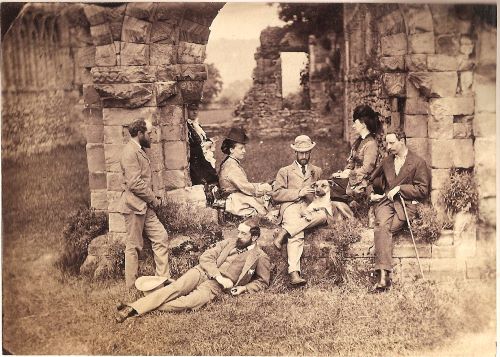
11 March 2025This talk by Will Motley will explore the history of Wenlock Abbey, Much Wenlock, Shropshire, from the earliest foundation of Wenlock Priory up the end of the 20th Century, with new information about the Milnes Gaskell family at Wenlock Abbey in the 19th century and their visitors such as Henry James, Thomas Hardy and many others. The talk will discuss this rare architectural gem and show pictures of the interior of the Prior’s Lodgings.
Will Motley was born in Much Wenlock and grew up at the Abbey, which was owned by members of his family from the 1540s to the 1980s.
Back […]
Read more…
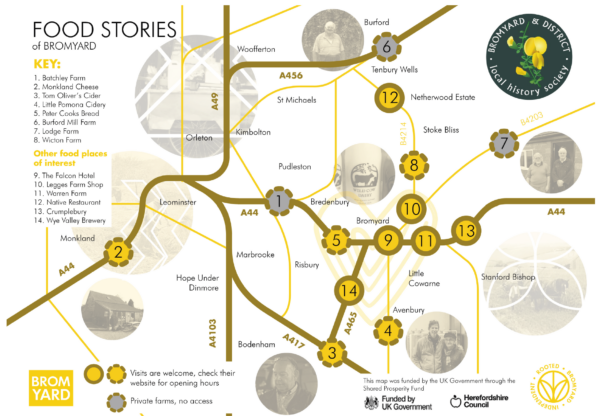
11 March 2025An exciting new initiative, Food Stories of Bromyard, by the BDLHS will be officially launched on the 3rd of April, between 5 and 8pm in the Oak Room at the Falcon Hotel in Bromyard. As refreshments will be served we would appreciate that you email Jayne at jayne@foodscapes.co.uk letting her know you will be attending by 27th March.
Jayne Bradley (a freelance food project manager) has been interviewing local farmers and food producers for the archive, with a grant awarded by HM Government, Cultural Development Fund.
She has interviewed 8 local farmers and producers. The interviews will go into our archive. For a sneak preview of one of the interviews click on the image to the right.
She has also created a map for visitors to Bromyard (above) which will be available across the town. The map will pinpoint all the significant food locations across the area. People will also be able to go online and download a recording of the best of the clips from the oral history interviews.
Jayne was keen for visitors to our town to be able to find out more about past and present stories of farming and food production in the area and to feel connected to Bromyard’s significant food history. Jayne wants to continue to develop awareness of the amazing food economy of the town and the rich history of agriculture in the area. She wants to put Bromyard on the Food Map and Food Stories of Bromyard is another step in that direction.
Back […]
Read more…
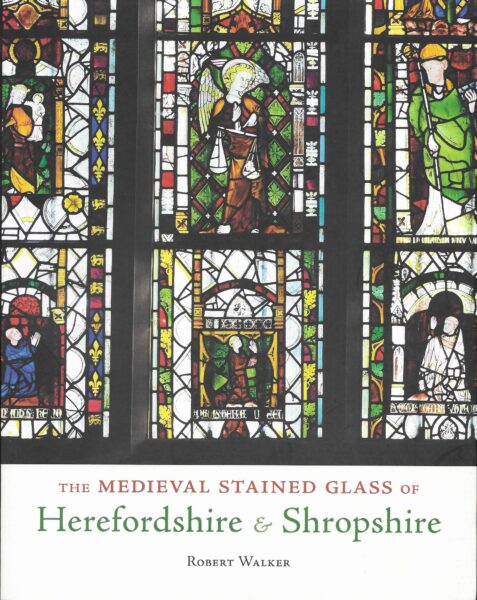
5 March 2025On Saturday 1st March we had an excellent talk on Stained Glass in and around Bromyard by Rob Walker author of ‘The Medieval Stained Glass of Herefordshire and Shropshire’.
Rob set the scene with a short video on the making of stained glass and the techniques involved before introducing us to the evolving styles of stained glass from medieval times to the present with examples from across Herefordshire and Shropshire.
It was impressive to hear just how many stained glass makers were operating in the 19th and early 20th centuries: some of them familiar names such as Kempe and Burne-Jones but also others less well known.
Rob then talked us through the stained glass of St Peter’s in Bromyard and many of the local churches including work by Kempe in Bockleton, Hamnish and Tedstone Delamere, Hardman in Thornbury (left) and Burne-Jones at Leysters.
Plenty of inspiration for more informed visits to lots of local churches!
Back […]
Read more…
15 January 2025Stained Glass in Bromyard and the Surrounding Village Churches by Rob Walker1st March at the LHS centre on Sherford St, 14:00 – 16:00Tea, coffee and biscuits will be served at half time. £10.00 per person, booking essential before 14th February. Numbers are limited so please book by email to anna.ross@live.co.uk to ensure there are remaining places. Payment can be made online via the button below, at the LHS or HOBS on Broad St.
Powered by
Rob Walker is the author of ‘The Medieval Stained Glass of Herefordshire and Shropshire‘, a richly-illustrated book which represents the first comprehensive study of the medieval stained glass of Herefordshire and Shropshire, and includes a gazetteer of all known surviving stained glass in the two counties for the period c.1300–1700. (This book is available to buy from our online shop, LHS centre and at HOBS on Broad St).
Back […]
Read more…
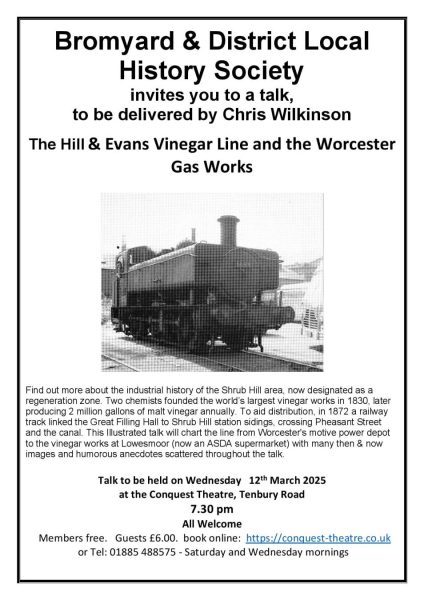
13 January 2025Our next talk will be on the 12th of March at the Conquest Theatre – 7.30pm. The Hill & Evans Vinegar Line and the Worcester Gas Works – the industrial history of the Shrub Hill area, now designated as a regeneration zone. Two chemists founded the world’s largest vinegar works in 1830, later producing 2 million gallons of malt vinegar annually. To aid distribution, in 1872 a railway track linked the Great Filling Hall to Shrub Hill station sidings, crossing Pheasant Street and the canal.
This illustrated talk by Chris Wilkinson will chart the line from Worcester’s motive power depot to the vinegar works at Lowesmoor with many then & now images and humorous anecdotes scattered throughout the talk. Book Here
Everyone is welcome, members free, guests £6.00. Tea, coffee, snacks and a full bar will be available together with a raffle – a good social evening with an interesting talk.
It would be helpful if you can pre-book before the event through the theatre booking system. This saves queuing at the box office before the start of the talk. Even though there is no charge for members, a complete list of those attending is required for fire safety reasons. Members will receive an email with a password allowing free booking. Book online: Here or telephone 01885 488575 – Saturday and Wednesday mornings.
Back […]
Read more…
7 January 2025Our programme for the year has just been released – more information will be added but for a sneaky peek see here
Back […]
Read more…

9 December 2024On Sunday 8th December we met at the Falcon for the Bromyard and District Local History Society Christmas Lunch. Sue Cooper welcomed us and introduced Jane Bradley and her Food Stories of Bromyard information boards.
Beautifully cooked turkey, ham and a sweet potato Wellington were served carvery style with plenty of different vegetables (there were some very laden plates!) followed by a choice of puddings and then coffee.Natalie and Sue organised a raffle with some great prizes to round of the event and we all went home with a copy of the Food Stories map.
Back […]
Read more…
19 November 2024The Society held its annual AGM at The Falcon on the evening of 18th November with the agenda following that published to members earlier, along with a proxy voting form.
The meeting was attended by upwards of 30 members, a very good turn out considering the weather, and also a number of members made use of their proxy voting forms.
The minutes of last year’s AGM and the Trustees Reports and Financial Statements for the year ended 30th April, 2024 were passed and the following Trustees were elected for the forthcoming year: Hugh Farey, David Grant, Debbie Hughes, Jane Merry, Cliff Morris, Mandy Palmer and Anna Ross. The Officers elected for the forthcoming year were: Chairman: Sue Cooper; Secretary: Natalie Miller; Treasurer: Ian Campbell.
A note for your diary: the AGM 2025 will be held on November 10th at 7pm.
Back […]
Read more…
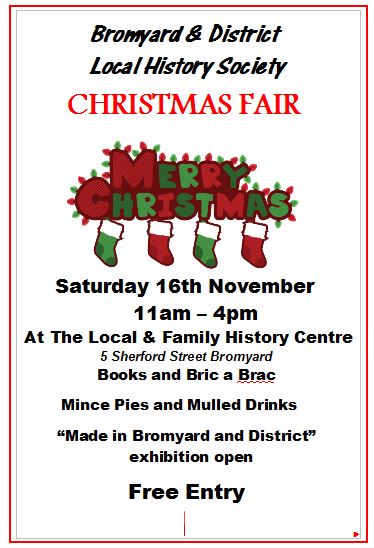
18 November 2024Many thanks go to all who came along and supported the Annual Christmas Fair at the Local & Family History Centre on Saturday.
Whether you came along to visit, help on a stall, made or donated mince pies or gave raffle prizes, thank you, it was very much appreciated.
You’ll be pleased to know it raised approximately £200.00 on the day.
Everyone who attended, very much enjoyed the mulled drinks and mince pies and it was also a lovely social occasion with members of the Society and the public.Mandy Palmer
Back […]
Read more…
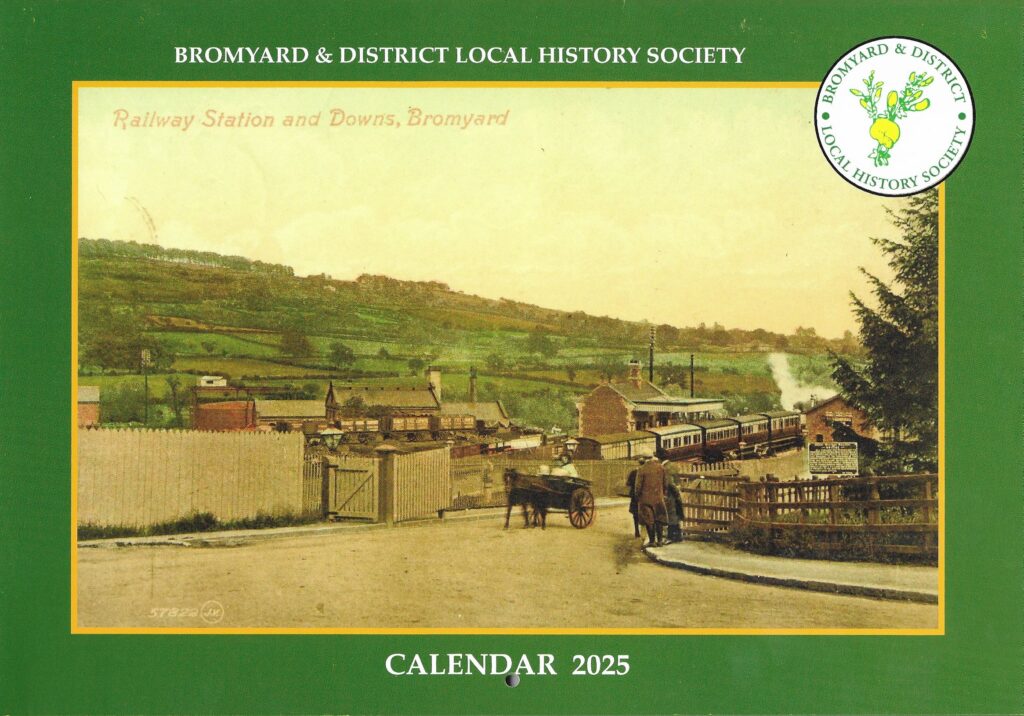
2 November 2024Our new BDLHS 2025 calendar is available to buy from the the Centre shop, HOBS and from our online shop. It features a selection of fascinating photos from our collection. Priced at just £5.00 (£6.90 incl P&P within the UK) it makes a great gift although you’ll probably also want to keep one for yourself!
Featuring 13 monthly pages there is plenty of space to record appointments, birthdays and reminders. And as there is also a January 2026 page you can ensure that until your next calendar arrives you have a little extra overlap.
Back […]
Read more…
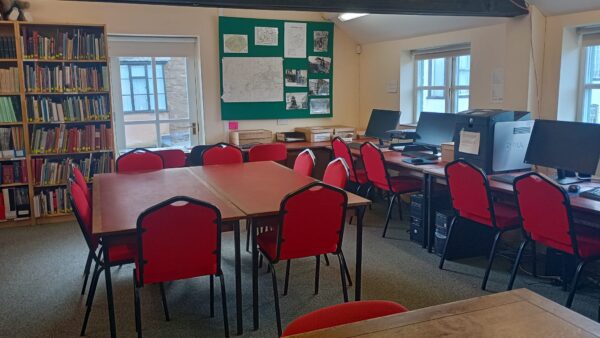
10 October 2024Research Room
On Saturday 5th October a Family History Open Day was held at the Local & Family History Centre in Sherford Street. We opened at 10.30am and it wasn’t long before the first couple of researchers arrived.Several of our extremely well qualified volunteers were kind enough to give their time to help. We were also joined by the Herefordshire Family History Society who proved to be a great help. We had a wonderful turnout on the day, of people researching local Bromyard families as well as some researching their property and family from outside our district. Amazingly, two researchers who moved into the area from elsewhere discovered they had ancestors from Bromyard, it is said that we tend to go back to our roots!We ended the day at 4pm absolutely exhausted but very pleased and satisfied that we were able to help so many people.The researchers on the day were so happy that they have promised to return as soon as they can to find out more about their roots.The day was such a success that we will be holding another Open Day next Spring, so watch this space!In the meantime, the research room at the Local & Family History Centre is open every Thursday & Friday 10am – 4.30pm (closed 1pm-2pm for lunch) and Saturday 10am – 12.30pm. Our volunteers are always on hand to help.There is no fixed charge except for printouts but donations are very much welcome to keep us going. We have no public funding but rely on fundraising, members subsciptions and donations from the public.
Back […]
Read more…
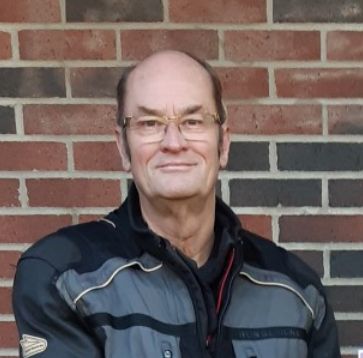
30 September 2024On Thursday 29th August our Chairman Alex Hoyle died suddenly whilst out cycling aged only sixty six years old. This news came as a terrible shock to us all.Alex Hoyle and his wife Joy moved to Herefordshire in 1998. They rented a cottage in Burley Gate for several months whilst waiting to occupy Wootton Farm in Pencombe. Alex’s background had been in the building trade. That was the start of a friendship with Barry and Erica Lawrence who introduced them to the Bromyard & District Local History Society about 2000.Alex joined the History Society at a time when the newly purchased History Centre was being adapted for our use. Members assisted with the decoration and there are photos of Alex, being tall, painting ceilings and many other tasks. Alex’s first term, of four as Chairman of the Society was in 2002 and he was in post when the History Centre was officially opened by the then Lord Lieutenant in May 2003Alex was always willing to help friends and members alike. We worked as a team to try and ensure the efficient operation of all activities. Alex was very forgiving of some of the volunteers lack of computer expertise but was always patiently willing to assist. He was nominated to represent the History Society at a Royal Garden Party in 2021 but sadly because of Covid this did not take place.Alex was the welcoming face of the Society not only on the Reception Desk but in representing the Society at local and other events. His knowledge of anything technical and especially computers was wide ranging which resulted in the phrase “Ask Alex” being everyone’s first port of call. He treated everyone with respect and everyone respected him too.As well as being Chairman several times, he was also Chairman of publications, membership secretary, he ran the website and dealt with the online shop. He was chief clock winder for the society’s grandfather clock and general D.I.Y person. He was extremely caring and generous with his time.Alex did so much for everyone and will be most sorely missed not only by Society members but also by the many friends in the other activities in which he was involved. He has left such a huge hole and we couldn’t have wished for a better friend and colleague. It’s difficult to know how we will cope without you, you did so much and yours are big shoes to fill but we will do our best to keep up the good work. R.I.P
Back […]
Read more…

18 September 202414th September, 2024 – Raffle draw with nibbles and wineThis year our “summer raffle” turned out to be a “late summer or early autumn raffle” but was very well supported by members of the Society and the general public who visited the Centre or Shop. The main prize was a picnic basket of comestibles to the value of £100.00 which was won by Sue and John Lahiff. We also offered “consolation” prizes: second prize of chocolates and prosecco was won by Mike Field; third prize of a bottle of red wine was won by Stuart Anderson; fourth prize of a bottle of ginger wine went to Cliff Morris. The draw, as advertised on the tickets, took place over a glass of wine and nibbles, at the History Centre in Sherford Street; a very pleasant occasion. The BDLHS is very grateful for all the support from our members and the proceeds of over £500.00 will be a nice addition to our funds. A big thank you to all who took part in any capacity.
Back […]
Read more…